
A Quick Reference for Coins
Coins have a rich history and cultural significance, often telling stories of past civilizations, economies, and artistry. For avid collectors, numismatists, or casual enthusiasts, having a handy a quick reference for coin details can be invaluable. This guide serves as a comprehensive overview, covering various aspects of coin collecting and identification.
Understanding Coins
Coins are typically made from metal and are issued by governments as legal tender. The essence of a coin lies in its design, denomination, material, and mint marks. Each coin can hold significant historical value as well as market value based purely on demand among collectors.
Types of Coins
There are several types of coins that are important to understand for anyone interested in collecting:
- Circulating Coins: These are the coins used in everyday transactions. They typically have a lower collectability but can still hold value based on rarity.
- Commemorative Coins: Issued to commemorate significant events or anniversaries. These coins may be produced in limited numbers, increasing their collector value.
- Bullion Coins: Made from precious metals like gold, silver, or platinum, these coins are primarily valued based on their metal content rather than their face value.
- Proof Coins: These are specially minted coins known for their high-quality finish. They are produced for collectors rather than general circulation.
Coin Identification
Identifying coins correctly is crucial for collectors and dealers. Here are the main elements to examine:
1. Design and Features
Each coin features distinguishing designs that include images, symbols, and inscriptions. Pay attention to both sides of the coin, as designs often vary. Keep a reference book or an online resource for comparison.
2. Mint Marks
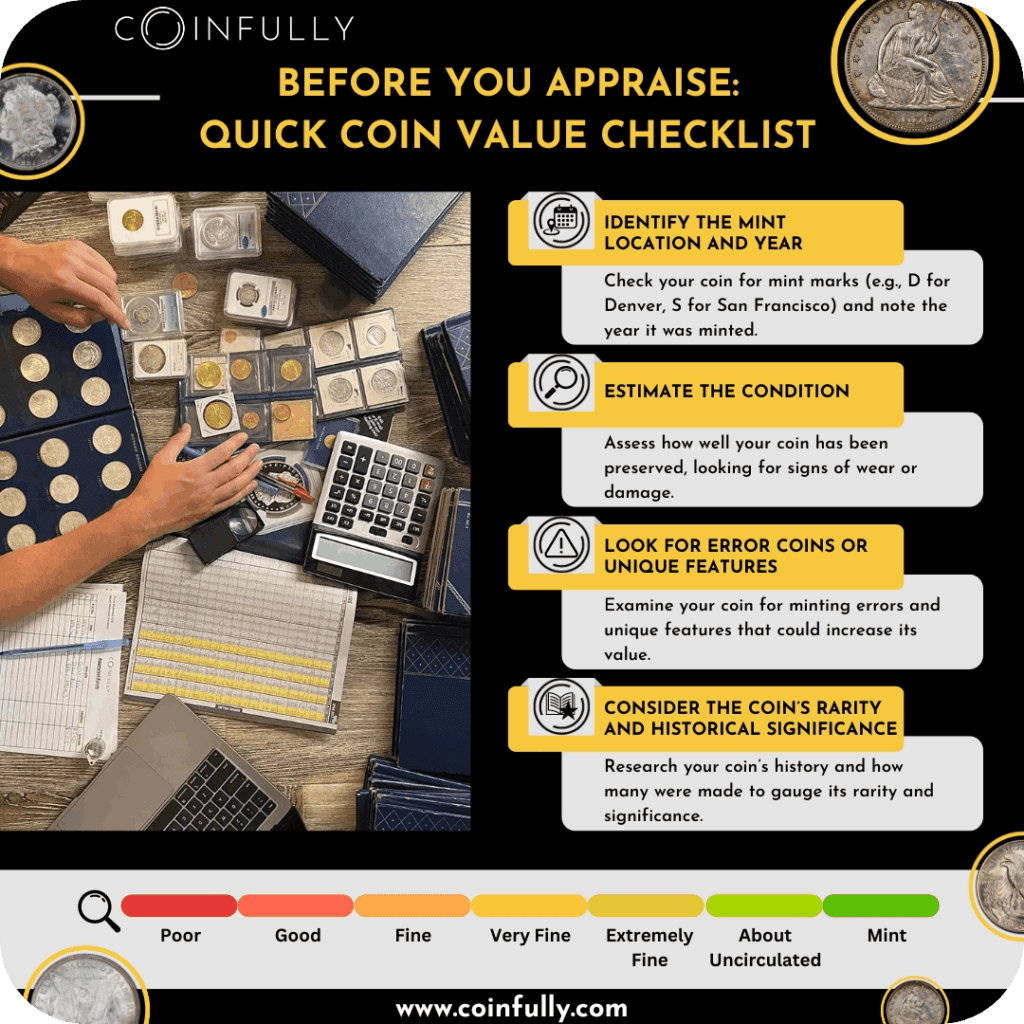
Mint marks denote where a coin was produced. Common mint marks include “D” for Denver and “S” for San Francisco in the United States. This can affect the coin's value significantly.
3. Edge Type
The edge of a coin can be plain, reeded (with grooves), or lettered. This characteristic can help further identify the coin’s origin and type.
Assessing Coin Value
Valuing coins can be a complex process influenced by multiple factors:
1. Condition
The condition of a coin is graded on a scale from “Poor” to “Mint” state. Coins in better condition typically fetch higher prices. Collectors often use a grading scale, such as the Sheldon Scale, to determine a coin's state.
2. Rarity
The rarity of a coin can significantly impact its worth. Limited mintage, historical significance, and demand among collectors are all factors contributing to a coin's rarity.
3. Market Demand
Stay updated on market trends as demand can fluctuate based on various factors, including economic conditions and collector interest. Joining a numismatic community can provide insight into current trends.
Tips for Starting a Coin Collection
If you’re new to the world of coin collecting, consider the following tips:
- Start Small: Focus on a specific type, era, or region to avoid being overwhelmed.
- Invest in Quality Tools: Use proper storage solutions, like coin holders and albums, and invest in magnifiers or scales for examination.
- Research: Knowledge is key in coin collecting. Read books, attend seminars, and engage with online communities.
- Attend Coin Shows: These events provide opportunities to interact with other collectors, buy, sell, and trade coins.
Protecting Your Collection
Once you’ve built a collection, protecting it should be a priority. Here’s how:
1. Proper Storage
Store coins in a cool, dry place away from direct sunlight. Use holders that prevent tarnishing and scratching.
2. Insurance
If your collection holds significant value, consider documenting it and obtaining insurance to protect against loss or theft.
3. Regular Reviews
Regularly assess your collection for condition and value. Track market trends and be aware of any changes in the numismatic community.
Conclusion
Coin collecting offers a fascinating glimpse into history and culture while providing a rewarding hobby. With this quick reference, you are now equipped to identify your coins, assess their value, and take the first steps toward building a remarkable collection. Enjoy the journey as you explore the world of coins!
